
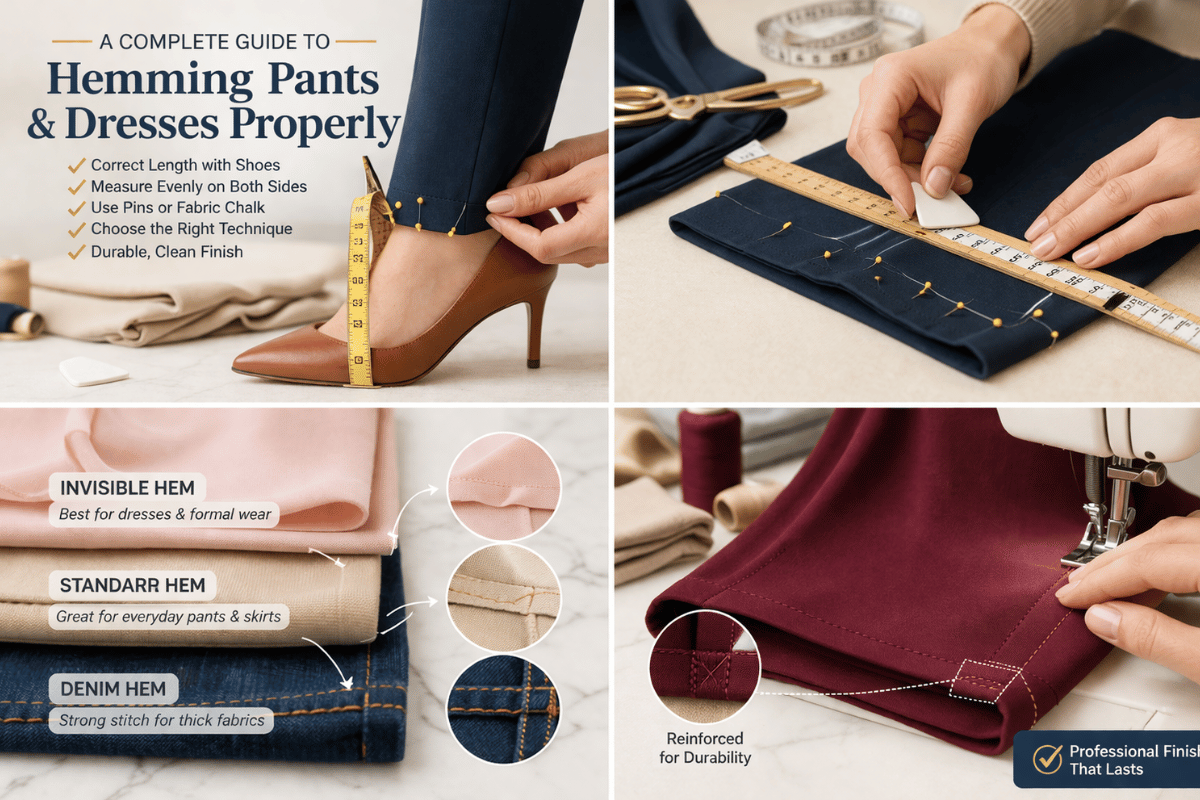
Hemming is one of the most common alterations, but it requires precision to achieve a clean and professional result. Whether it’s pants, dresses, or skirts, the right hem length can significantly improve how an outfit looks and feels.
The first step in hemming is determining the correct length. This should always be done while wearing the shoes you plan to use with the garment. For pants, the hem should sit just above the shoe or lightly rest on it, depending on the style. For dresses and skirts, length depends on personal preference, but balance and proportion should always be considered.
Measuring evenly is critical. Even a slight difference between sides can be noticeable. Using fabric chalk or pins helps maintain accuracy before cutting or folding. It’s also important to leave enough allowance for adjustments, especially if you plan to alter the length again in the future.
Different fabrics require different techniques. Denim and thick materials need stronger stitching, while delicate fabrics like silk or chiffon require careful handling to avoid damage. Invisible hems are often preferred for formal wear, while standard hems work well for everyday clothing.
Another factor to consider is durability. A well-done hem should withstand regular wear and washing without coming loose. Reinforced stitching at stress points can prevent future issues.
For those who want a clean, professional finish without risk, using Hemming services Kitchener ensures that garments are adjusted correctly with long-lasting results.